
Assessment Center Processing Route
The Lee County Juvenile Assessment Center is an LCSO juvenile assessment and booking point. It is not a long-term confinement facility. Processing can lead to release to an authorized parent or guardian, another court-directed result, or movement into the Florida Department of Juvenile Justice system. A youth ordered into secure detention goes to the Southwest Florida Regional Juvenile Detention Center rather than remaining at the assessment center as a long-term detainee.
This role changes the record question. The key fact is not “who was released from jail,” but what happened at the end of assessment processing. An authorized person may need the intake contact, juvenile court order, DJJ placement information, or assigned case contact. The official LCSO assessment-center page supplies public facility information, not a youth roster.
| Processing outcome | Next record source |
|---|---|
| Release to authorized adult | Assessment-center or juvenile case contact |
| Secure detention order | DJJ regional detention center and juvenile court |
| Other court direction | Counsel and juvenile court record |
| Residential commitment later | DJJ placement and probation channels |
Confirm Assessment Center Release
An authorized caller should gather the youth’s full legal name, date of birth, juvenile case number if known, date of processing, and proof of relationship or authority. Staff may verify identity before discussing placement or handoff information. That safeguard is part of juvenile confidentiality. It is not evidence that the youth has no record or that the assessment center cannot route an authorized inquiry.
- Call the assessment center using the official public number and identify the caller’s lawful role.
- Ask whether processing ended with release to an approved person, transfer to secure detention, or another authorized destination.
- If secure detention followed, contact the regional DJJ center or assigned juvenile probation contact.
- Use counsel or the juvenile court for the controlling order and access to case-specific documents.
- Follow the latest written reporting, placement, or court instructions rather than an adult database result.
Do not search LCSO Recent Releases for a youth processed here. That public system covers adult county bookings. FDC’s adult corrections databases also do not serve as the record of juvenile assessment. The correct answer comes from the youth-specific LCSO, DJJ, counsel, and juvenile court chain.
Juvenile Processing Is Confidential
A public list of names, assessment dates, photographs, or release outcomes would cross the juvenile access boundary. The assessment center page should remain navigational. Authorized people can ask the responsible office for lawful access; unrelated members of the public cannot convert the adult arrest-search model into a youth feed.
The Lee Clerk court-record page explains that confidential case categories have restricted access. Some public court records use ordinary request tools, but juvenile confidentiality still controls protected youth material. Ask the Clerk, counsel, or the assigned case office what proof of authority is required.
- Assessment
- Initial screening and processing that helps determine the next lawful juvenile step.
- Secure detention
- Locked DJJ custody pending court or placement action.
- Commitment
- A residential DJJ placement ordered at juvenile disposition.
- Authorized person
- A parent, guardian, counsel, agency, or other person allowed to receive the specific information.
Confidentiality also prevents false conclusions. A missing adult result does not mean the youth was released. A phone transfer does not establish a secure detention placement. A court order, agency record, or case contact must confirm the actual outcome.
Assessment Center Facility Role
LCSO lists the center at 2117 Martin Luther King Boulevard in Fort Myers. Its proximity to the Downtown Jail does not turn it into adult detention. The jail at the neighboring address handles adult central intake and booking, while the Juvenile Assessment Center performs a distinct youth assessment function under narrower access rules.
The official LCSO facility directory gives the public agency context.
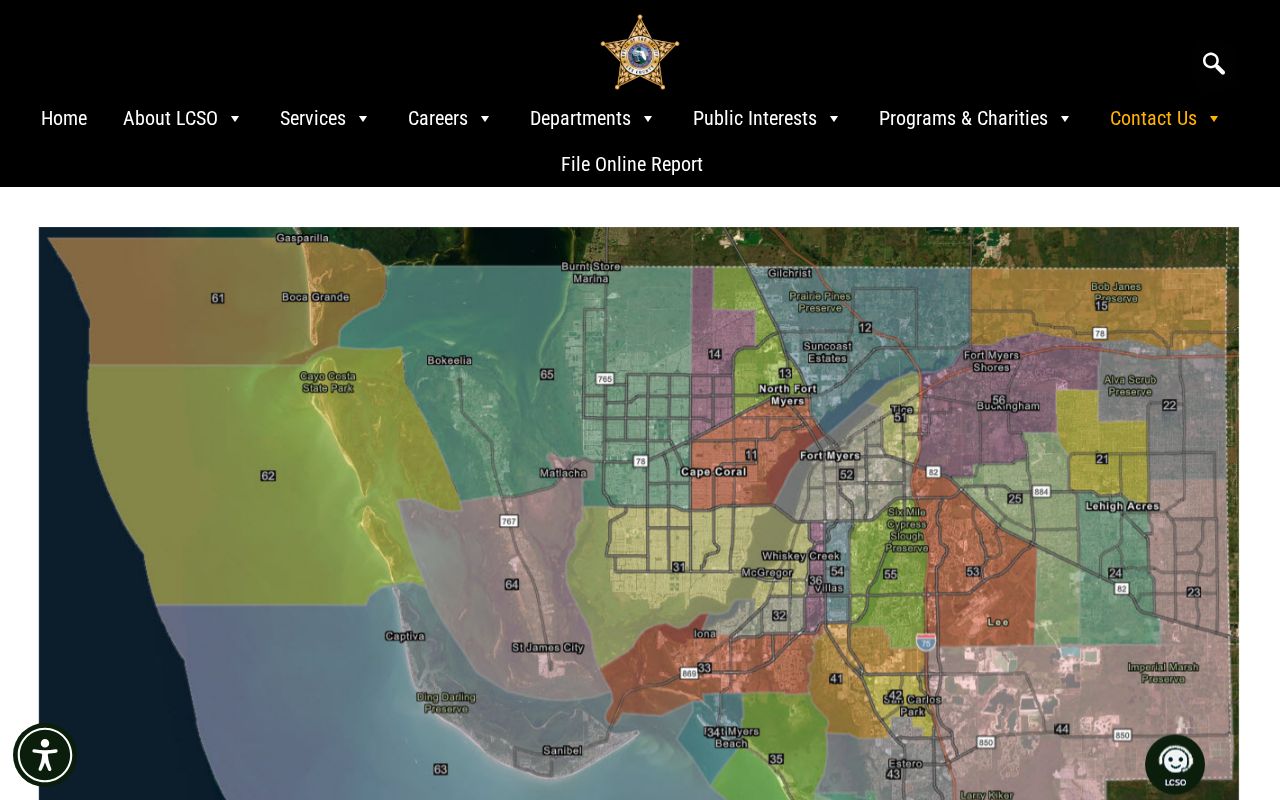
The directory helps distinguish the assessment site from adult jail units. It does not disclose a youth’s identity, booking details, or release result.
No bed capacity or average stay should be invented for the assessment center. Its key researched distinction is functional: it processes and assesses youth, then routes the next step. Long-term language would misstate that role.
Assessment and Detention Differ
The Southwest Florida Regional Juvenile Detention Center is the secure DJJ detention facility serving Lee and nearby counties. A youth ordered into secure detention moves into that channel. The assessment-center phone call may therefore be only the start of the inquiry. Ask whether the youth was transferred, then contact the correct DJJ or case office as an authorized person.
Fort Myers Academy differs again. It is a moderate-risk residential commitment program for female youth, not an intake center or short-term secure detention facility. A youth reaches residential commitment through court and DJJ processes. Neither juvenile facility appears in the adult Sheriff release list.
The regional juvenile detention contact page explains the secure-detention route. Use it only when the assessment outcome points there. A transfer to that center means custody continues. It should never be labeled as release from juvenile control.
Lee Juvenile Record Boundaries
Lee County has two clusters that can cause location-based errors. Downtown adult intake and juvenile assessment stand near each other on Martin Luther King Boulevard. Adult and juvenile facilities also stand near one another in the Ortiz corridor. Building proximity does not merge systems, search tools, or access rights.
The LCSO Corrections Bureau page describes the adult county jail system. DJJ pages describe youth detention and residential programs. The Juvenile Assessment Center has its own LCSO page. Start each inquiry with the exact facility, the youth or adult status, and the responsible agency.
This boundary keeps adult release language from being applied to youth. It also avoids treating an assessment completion as the end of a case or a move to DJJ as a return home. Note: A facility address cannot replace the agency and case record.
After Assessment Processing
If a youth is released to an approved person after assessment, ask for the next written instructions. There may be a court date, juvenile probation contact, service referral, or other condition. If the youth enters secure detention, ask for the case contact and authorized communication process. If another placement follows, identify its exact name and operator.
Only the case team can confirm transportation and handoff details. Public sources do not establish a routine release time, door, or waiting area for youth. Do not travel based on an adult jail assumption. Call the authorized contact, verify the destination, and use the latest court or agency instruction.
The Lee County facility overview maps adult and juvenile systems for general routing. It does not disclose youth facts. Case-specific confirmation must remain with LCSO juvenile staff, DJJ, counsel, or juvenile court.
Assessment Center Contact
LCSO lists the Lee County Juvenile Assessment Center at 2117 Martin Luther King Boulevard, Fort Myers, Florida, with telephone 239-344-5101. Research did not supply a separate public hours schedule, so none should be assumed. Call the official number for routing and be ready to establish authority.
2117 Martin Luther King Boulevard
Fort Myers, FL
239-344-5101
Juvenile assessment and booking point
Ask whether assessment processing ended, whether the youth moved to secure detention, and which authorized office holds the next record. Do not request a public youth list. For a court order, contact counsel or the juvenile court. For DJJ placement, use the assigned juvenile contact. This sequence respects confidentiality and the center’s true processing role.
If processing led to release to an approved adult, ask for the next court date and any written follow-up instructions through the authorized channel. If secure detention followed, confirm the exact DJJ center and case contact. The assessment center should not be treated as the long-term source once another placement assumes responsibility.
Assessment Release Record Checks
Keep the date of processing, the caller’s contact notes, and each lawful notice together. An assessment result can be followed quickly by a court hearing, secure detention placement, or release to an approved adult. Those steps may be recorded by different offices. Ask each office to explain only the record it created and to identify the next responsible contact.
If dates or destinations differ, compare the newest court or agency direction. A scheduled hearing is not a release date. A transfer time is not proof that the youth returned home. Likewise, release from the assessment center does not show that the juvenile matter ended. Counsel or the assigned juvenile case contact can explain any continuing terms.
For an authorized request, use narrow identifiers and avoid collecting unrelated youth information. The goal is to confirm one processing outcome and the next lawful step. No public list is needed. This focused method respects confidentiality while giving a parent, guardian, attorney, or permitted agency contact a clear route to the correct record holder.