
Lee County Jail Release Paths
The Downtown Jail is the Lee County Sheriff’s Office central intake and booking point. An adult arrested in Lee County is processed through this function even when later housed at the Core Facility or Community Program Unit. That system design matters after release. The three adult sites do not publish three independent rosters. They share the countywide LCSO Arrest Search, so the booking number and custody movement are more useful than a remembered housing name.
A record marked no longer in LCSO custody proves only that the Sheriff is no longer the custodian for that booking. Bond, a court order, sentence served, dismissal, transfer, or another administrative event may produce that result. A move from Downtown to Core or CPU is internal and is not a release. A delivery to the Florida Department of Corrections, another county, a federal agency, or immigration custody also is not a return to the community.
| Recorded event | Next source to check |
|---|---|
| Community release | LCSO release entry and Lee Clerk case docket |
| Move to Core or CPU | Same LCSO booking record |
| Transfer to state prison | Florida Department of Corrections offender record |
| Transfer to another custodian | The receiving county, federal agency, or ICE |
Confirm Lee County Jail Release
Use the Sheriff search for the administrative movement, not merely the live-custody view. A released person may vanish from a current roster while still having a searchable past booking. LCSO provides Recent Releases, an In Custody choice that can be set to No, and a Release Date Range. The result header includes name, date of birth, booking number, and status. An expanded booking may add the release date and time, charges, bond data, case number, arresting agency, facility, and photograph.
- Open the official LCSO Arrest Search and choose Recent Releases, or enter the person’s name, date of birth, or booking number.
- Set In Custody to No when appropriate. Add a narrow Release Date Range if the period is known.
- Open the booking detail. Match identity and booking number, then note status, release timestamp, charge, case number, bond information, and any destination actually displayed.
- Use the Lee Clerk Matrix search to read the court docket and filed order. A jail status is not a final court disposition.
- If the entry or case points to a transfer, continue with the named receiving agency rather than treating the LCSO exit as freedom.
The broader Lee County released-inmate search and records path explains how county, state, court, VINE, and federal records fit together when one booking does not settle the question.
Lee County Jail Release Records
The public search is a useful first view, but LCSO states that it is a courtesy and not a substitute for a Chapter 119 public-record request. Ask Central Records when a booking is missing, an older image is no longer displayed, or the release destination is unclear. A narrow request should include the full name, date of birth if known, booking number, and approximate booking or release date. Request the booking sheet, custody-movement record, release date and time, release code or destination, and booking photograph only when each item is needed.
14750 Six Mile Cypress Parkway
Fort Myers, FL 33912
239-477-1350
Monday through Friday, 7:00 a.m. to 5:00 p.m.; lobby opens at 8:00 a.m.
The official Central Records page provides the request portal and current terms. It posts a copy price of $0.15 per page and allows permitted extensive-use costs. Those are records charges, not a condition of jail release. Ask for an estimate when the scope may require substantial staff time.
LCSO’s record shows the jail movement. The Lee Clerk explains the judicial result. Match the booking’s case number to the docket before reading bond as dismissal or a release entry as acquittal. A bond release means the person left custody while the case may continue. “Time served” concerns that confinement and does not by itself end every case, warrant, detainer, or supervision term.
Lee County Jail Release Facts
LCSO describes the Downtown Jail as a maximum-security county jail with 457 beds. It handles central intake and booking for arrests across Lee County. That role explains why a booking can begin Downtown and later show housing at another LCSO unit without a new public roster. The official Corrections Bureau page identifies the adult facilities and their distinct functions.
The official LCSO facility directory shows how the agency presents its sites.
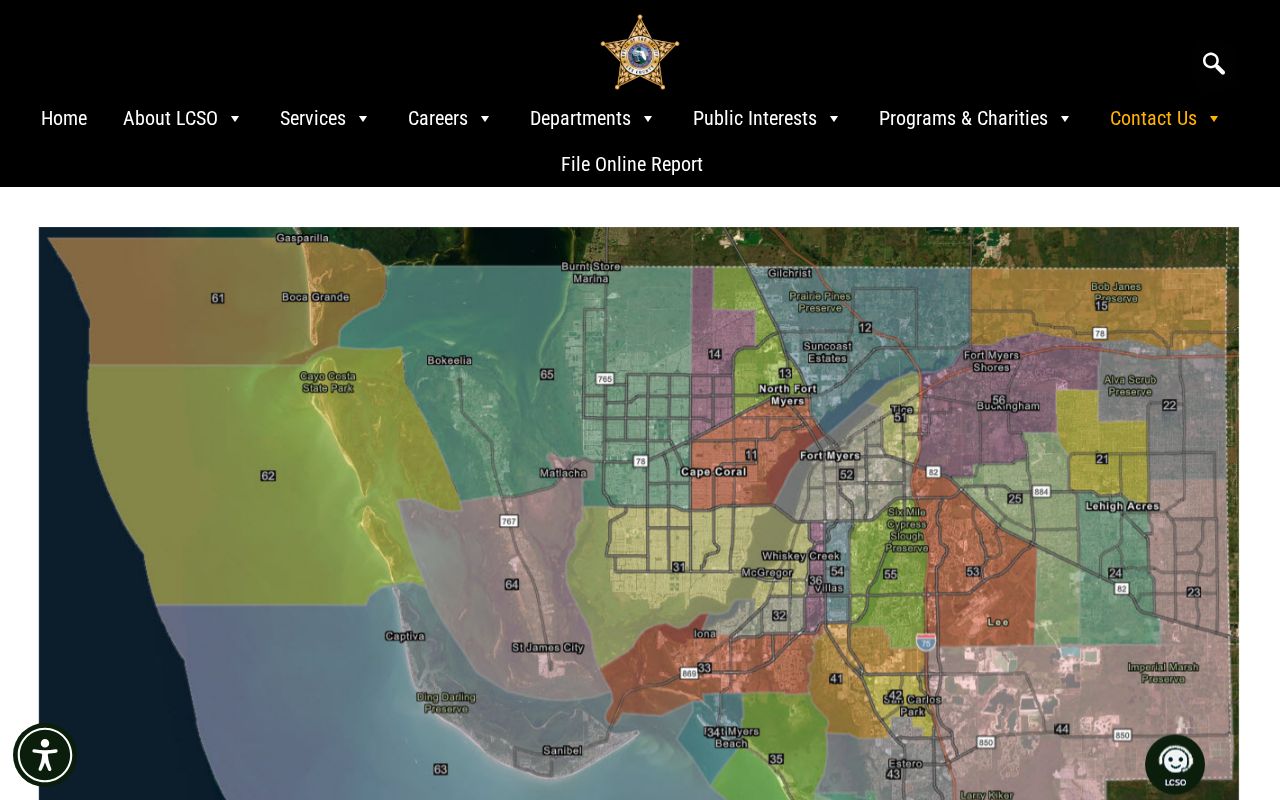
The directory is a location source. Release status still comes from the countywide booking record, not from a facility address or an internal move.
- Booking
- The intake record created for an arrest or detention episode.
- Discharge
- The documented end of a particular custodian’s confinement.
- Transfer
- A move to another unit or agency while custody continues.
- Detainer
- A request or authority that may cause another custodian to take charge.
Lee County Jail ICE Transfers
LCSO entered Task Force Model and Warrant Service Officer agreements with ICE in March 2025. Under the Warrant Service Officer model, trained local officers may serve or execute administrative immigration warrants on people already in agency custody. That local arrangement makes the destination field especially important. An LCSO release timestamp can be followed by immigration custody rather than a community return.
Neither the agreement nor the jail address makes the Downtown Jail an ICE detention facility. Research found no separate ICE detention-services contract or ICE facility at this jail. When facts point to immigration custody, use the ICE Online Detainee Locator. It searches current detainees and people released from ICE custody within a limited recent period. Failure to find a person does not rewrite the LCSO event.
For any handoff, preserve the sequence: release from LCSO custody, reception by the next custodian, and later release from that custodian if it occurs. Each step has its own agency record. Note: A county release timestamp and a community release are not always the same event.
Lee Facility Release Systems
Facility names and nearby addresses can point to different record systems. Downtown Jail is the adult LCSO intake site. The Juvenile Assessment Center is next door, but it is an assessment and booking point for youth, not an adult jail unit or long-term confinement site. A youth ordered into secure detention moves into the DJJ channel. Juvenile confidentiality means there is no public list of youth to merge with adult Recent Releases.
The same boundary matters on Ortiz Avenue. LCSO operates Core and CPU for adults. The Southwest Florida Regional Juvenile Detention Center and Fort Myers Academy are DJJ facilities with distinct detention and residential-commitment roles. Hearing only “Downtown” or “Ortiz” is not enough. Identify the full facility name and operator before choosing a release record. Adult LCSO bookings use Arrest Search. Authorized juvenile inquiries go through DJJ, counsel, juvenile probation, or the juvenile court.
A move among adult Sheriff units is not a discharge. A move from juvenile assessment to DJJ detention is also not a community release. These are different custody systems, and each movement must be described in the terms used by its record creator. Note: No public youth release list belongs in the adult Lee County Jail workflow.
Lee County Jail Contact
The published Downtown Jail address is 2115 Dr. Martin Luther King Jr. Boulevard, Fort Myers, Florida 33901. Use 239-477-1500 as the Corrections information line. Official LCSO pages have displayed jail and Corrections numbers in differing pairings, so the function label should stay with the number when citing it. Staff may direct documentary requests to Central Records.
2115 Dr. Martin Luther King Jr. Boulevard
Fort Myers, FL 33901
239-477-1500
Corrections information line
Call for an immediate custody question, but use the written record for proof. Ask whether the event was an internal move, a community discharge, or a transfer. For final case outcome, obtain the Clerk’s filed order. For a state-prison handoff, use FDC. This keeps the answer tied to the agency that created each part of the release trail.
A call is most useful when it is tied to one booking. Have the person’s full name, date of birth, booking number if known, and the approximate date ready. Ask staff to identify the correct records channel if they cannot disclose the answer by telephone. Do not ask whether a missing name “means released.” Instead, ask whether LCSO recorded a release, internal move, or transfer and how to obtain that movement in writing.
For a person sent to state custody, the Florida Department of Corrections Offender Information Menu becomes the next source. Search all corrections databases when the category is uncertain, then match the DC number, name, physical details, offense county, and status. A county booking’s transfer date and an FDC reception date are related records, not duplicate descriptions. Later FDC release or community supervision has its own status and date.
Florida VINE can add a custody-change notice for a specific person, but it is not the archival record holder. A delayed alert should be checked against LCSO or the receiving agency. Likewise, a Clerk docket can explain bond, dismissal, sentence, or another judicial action but does not replace the jail’s custody timestamp. Using all three sources for their proper roles gives a clearer answer than forcing one portal to explain the full event.
Keep a simple event log while checking. Note the booking number, LCSO release time, court case number, and any later agency status. If two records seem to conflict, compare their update dates and ask the record creator to clarify its own entry. Never change a transfer into a community release merely because the first agency stopped listing current custody.