
CPU Release Paths
The Community Program Unit is one part of the Lee County Sheriff’s Office adult corrections system. CPU does not publish a separate roster. Its booking and release events appear in the same LCSO Arrest Search used for Downtown Jail and Core. This matters because a person can change housing within LCSO without being released, and the public record may continue under the original booking number.
CPU’s programs can prepare a person for release, but completing a class, treatment phase, or reentry task is not itself a legal discharge. The booking status must show the custody movement. If the person left for the community, the release entry and court record explain the event. If the person moved to Core, court, FDC, another county, federal custody, or immigration custody, the next record comes from that location or agency.
| CPU event | Record meaning |
|---|---|
| Program completion | Milestone only; confirm the booking status |
| Internal LCSO move | Custody continues under the county system |
| Community release | LCSO release plus court and supervision checks |
| Agency transfer | Follow FDC or the named receiving custodian |
Confirm CPU Release Status
Search by booking number when possible. It is more precise than a name and stays useful across an internal housing move. Recent Releases is suited to a new event. For a past CPU booking, enter the name and birth date, set In Custody to No, and use a Release Date Range. Expand the match. Record the release timestamp, status, charge, court case number, bond fields, and any transfer or destination wording that the live detail actually displays.
- Open LCSO Arrest Search and enter the strongest known identifiers.
- Choose In Custody: No for a released-person query, or select Recent Releases for a new event.
- Open the full booking and compare name, birth date, and booking number.
- Search the case through the Lee Clerk Matrix system to read the judicial action.
- Check FDC community supervision when the record or sentence indicates probation, conditional release, or another state-supervised status.
A community release and the end of legal control are different facts. Probation is a court-ordered form of supervision, often used instead of or after confinement. Discharge means a specified custody or supervision term has ended. A person may leave CPU and still report to a supervising office. The Lee County probation and parole resource explains how to check that separate record.
CPU Release Record Requests
The Sheriff search is a public convenience. LCSO states that it does not replace a formal Chapter 119 request. Central Records is the route for an older booking, a missing release field, or a document that must show the custody movement. Give the full name, date of birth if known, booking number, and approximate dates. Ask for the booking sheet, movement history, release date and time, release code or destination, and only the other parts needed for the question.
14750 Six Mile Cypress Parkway
Fort Myers, FL 33912
239-477-1350
Monday through Friday, 7:00 a.m. to 5:00 p.m.; lobby opens at 8:00 a.m.
The official LCSO records portal posts a $0.15-per-page copy price and permits extensive-use charges. Those fees concern access to copies. They are not release conditions. A focused request reduces delay and helps staff locate the correct booking episode.
Use the Lee Clerk for final case disposition. LCSO itself cautions that booking data reflects arrest or detention facts, not guilt, dismissal, acquittal, or final judgment. Bond can explain how a person left custody while the case continues. A release after time served may close that confinement but leave another warrant, detainer, case, or supervision term in force.
CPU Reentry and Release
LCSO describes CPU as a 336-bed minimum-security unit with alcohol and drug treatment and reentry-oriented programming. The Corrections Bureau also describes reentry case management that can involve treatment referrals, identity-document help, Social Security benefit reinstatement assistance, bicycles, emergency kits, clothing, and other basic needs. These services can help with transition, but none serves as a public locator or proof of release.
The official Corrections Bureau page is the source for CPU’s custody level and program role. Assistance with an ID, birth certificate, or Social Security card should be read as a program service, not a promise that every participant gets every document at the release door.
Property is a separate question. Lee County Pretrial Services directs a person seeking property secured after arrest to the arresting agency or the jail information line. That path differs from CPU reentry help. Ask which agency holds the item, then use that agency’s instructions. Do not assume that all property follows a person through every move among Downtown, Core, and CPU.
- Reentry
- Planning and support intended to help a person return to the community.
- Program milestone
- A treatment or case-management step that does not itself change legal custody.
- Probation
- Court-ordered supervision in the community.
- Transfer
- A move while custody continues with LCSO or another agency.
Ortiz CPU Records Boundary
The Ortiz area includes CPU, the adult Core Facility, the Southwest Florida Regional Juvenile Detention Center, and Fort Myers Academy. Nearby addresses do not mean shared custody. CPU and Core are adult LCSO units. The detention center and academy are Florida Department of Juvenile Justice facilities with confidential youth records. A reference to “Ortiz” must be tied to the exact building before choosing a search path.
The LCSO facility directory helps identify county locations.
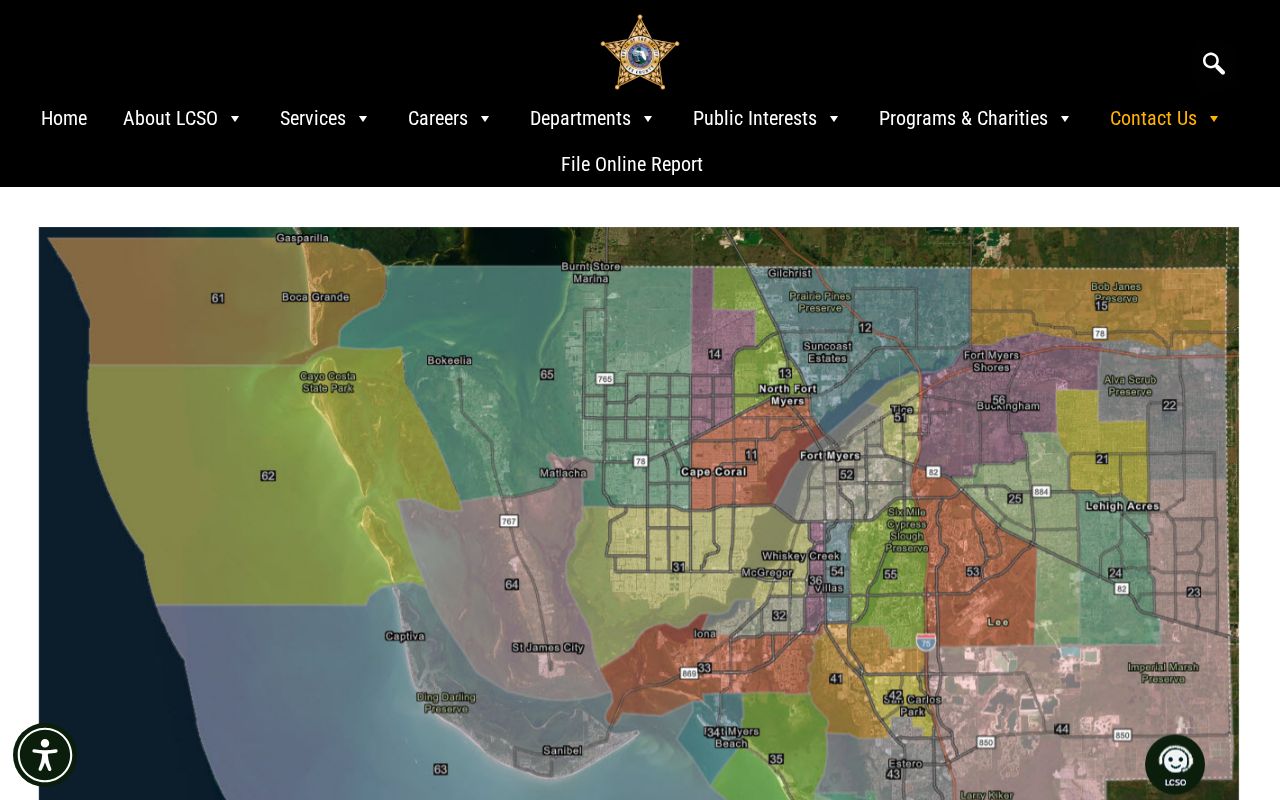
The directory confirms the county facility context. It does not turn the neighboring DJJ programs into adult Sheriff records or prove a CPU discharge.
An adult CPU booking belongs in LCSO Arrest Search. A confidential juvenile matter belongs with DJJ, juvenile court, and an authorized parent, guardian, or counsel. This agency boundary protects youth information and stops a nearby address from producing a false adult release result. Note: The exact facility name is essential in the Ortiz corridor.
CPU Release and ICE Custody
Lee County’s Sheriff entered Task Force Model and Warrant Service Officer 287(g) agreements with ICE in March 2025. The Warrant Service Officer model allows trained local officers to serve or execute administrative immigration warrants on people already in agency custody. Thus, a timestamp showing departure from CPU or LCSO can be followed by immigration custody instead of a community return.
No separate ICE facility or ICE detention-services contract at CPU was verified. When the facts point to an immigration handoff, use the ICE Online Detainee Locator for the next custody stage. Its limited recent coverage is not a permanent history. Keep the LCSO movement and any ICE event as two agency records.
The same principle controls a state-prison handoff. LCSO records the exit from county custody, while FDC records reception, incarceration, release calculations, and later discharge or supervision. One agency’s “released” label cannot answer for every later custodian.
CPU Release Contact
CPU is part of the Ortiz complex in Fort Myers. Research gives the shared Ortiz site at 2501 Ortiz Avenue, Fort Myers, Florida 33905, and LCSO pages associate 239-477-1700 with Core and Ortiz corrections functions. Use that number for facility routing. Use Central Records for documents and the Clerk for judicial outcome.
2501 Ortiz Avenue
Fort Myers, FL 33905
239-477-1700
Ortiz corrections information
When calling, ask one focused question: is the person in CPU, moved within LCSO, released to the community, or transferred? Staff may limit details or direct the caller to the public search and request process. That routing is normal. Written agency records remain the best proof of a CPU release.
Have the booking number ready. A program name or the word “Ortiz” may not identify the correct person or unit. Ask staff to preserve the agency’s exact status terms. If the answer is transfer, obtain the receiving custodian when that information is public. If the answer is community release, compare the court docket and check whether a supervision record follows.
For a state transfer, use FDC’s Search All Corrections Offender Databases rather than assuming the county record remains the full custody source. Match the new DC number and offense data. For VINE, treat an alert as a notice that prompts confirmation, not a certified history. CPU’s booking record, the Clerk order, and the next agency record each answer a separate part of the release question.
CPU Release Verification Notes
Record the exact release term used by LCSO. That wording helps distinguish a community return, an internal move, and a transfer when other agency records are checked.